Search This Blog

Wednesday, October 11, 2017

Operation Hail Storm by Brett Arquette

Brett Arquette's first outing in the Hail series makes me happy. I've been trying to find someone else to get my Tom Clancy fix from. Arquette may just be it. There are a couple of things that are a little awkward with the book. He does this thing where he backs up a scene and repeats the same scene from someone else's viewpoint. I get what he's trying to do, but it interrupts the flow of the story. It's the only flaw I could find.

That said, it's a thumping good story and unlike a lot of action-thrillers out there, Arquette doesn't lean on hard profanity and sex to advance the plot.
At least if any of that is in there I missed it. The story was compelling. It had all the military and techno-stuff of a Clancy novel and kept me glued to the page all the way to the end. I suspect Arquette is going to get better and better with each new novel. I'm really looking forward to his next one.

Congratulations on a great debut, Brett. I'm going to give it three pineapples for being a good story and for not using the f-wordand other such hard profanity and sex
as punctuation! Operation Hail Storm is just a good old action story like I like 'em.

© 2017 by Tom King


Saturday, October 7, 2017

The Railway Children


If I read a story to children, I want it to celebrate the goodness in people and I want it to have a happy ending. Elizabeth Nesbit's grand old story does all that. Some 21st century readers are kind of harsh in their criticism of these books. It's not layered with enough socialist principles, feminist ideals or criticism of all things corporations to suit them. The criticism is that the story is not "realistic".

With children's books, I will always allow a trip to fairyland idealism for the sake of the kids. Better they grow up on ideals than harsh realities in their bedtime stories. Let them learn the ideals first and when they are adults, they will have the ideals against which to judge the rightness of the harsh realities.
  • It is good that Nesbit made her country-folk fallible and at the same time willing to admit their failings. 
  • It's good that neighbors are shown being neighborly. Even Perks' pride is shown up for a flaw. 
  • It's good that the "old gentleman" is a decent man. He serves to remind us that not every successful man is an evil capitalist with no heart. 
I wonder sometimes if part of the reason so many successful businessmen seem so hard-hearted is because we have been propagandized by a generation of literature that inevitably characterizes them as evil and hard-hearted. Perhaps they merely oblige us, given that we expect them to be so horrible and rotten. Wouldn't it be better to expect more rather than less to whom great wealth and responsibility has been given? The kindly capitalist may be a myth in this day and age, though having met a lot of them in my work in philanthropy, I doubt this caricature is entirely accurate.

The Railway Children is a classic
Three Pineapples!
Remember what we all learned from Joseph Campbell. Myth is the great teacher. Perhaps we should enlist our myth-telling powers to lift up and inspire rather than to tear down and vilify. Especially in children's stories, I wonder whether or not we shouldn't expect more of our leaders and our successful people instead of settling for the old saying, "With the rich and powerful, always a little patience." Maybe we should stop being shocked when they turn out to be kindly and go back to being shocked when they show themselves to be brigands.

Just a thought.

© 2017 by Tom


Jack Gregson and the Forgotten Portal

Peter Wilson's debut novel in the Jack Gregson series of young adult/fantasy novels is pretty much standard wander-around-picking-up-magic-stuff sorts of fantasy novels. It comes off like a video game plot. Peter asked me to read and review this because he saw my review of The Chronicles of Narnia. I get a lot of requests for reviews from new fantasy authors because of my Lewis review.

People writing novels that borrow the magical elements like the doors to other worlds and evil witches idea from Lewis and earlier authors of fantasy for children, see the Narnia Chronicles as simple fantasy based on a cursory reading. I tend to disappoint them when I review the books.

Like most YA fantasy novels these days, Wilson's first Gregson novel has all the standard elements:
  • Magic doors to other worlds
  • Magic objects to be discovered
  • Puzzles to be solved
  • Magic families that protect the world from evil
  • Magical and fantasy creatures
  • Children who discover they have magical powers
  • The wise mentor 
  • The sinister relative
Magic doors and such were not new even in Lewis' time, nor were magical beasts, puzzles and special children. Unlike Lewis, however, the Jack Gregson tale is less strategic in how it uses these elements to advance the story. Lewis preserves the wonder, the dramatic tension and mystery throughout his tales, but he never makes magical solutions happen by accident. Even the visit of Father Christmas to the Pevensies in "The Lion, the Witch and the Wardrobe" only happened because the witch's power to sustain winter was ending.

In Gregson, the magical stuff strains credulity, it comes so fast and furious. To be sure Wilson is busily setting up the sequels, but he falls prey to the new author's temptation to brush the magical paint in layers that are rather too thick. More is not necessarily better.

If you're a video-gamer, the book probably feels familiar in how quickly the magical stuff pops up and may serve to keep an ADD reader engaged. I think it's a mistake too many books in this genre make in that all that dense magical stuff doesn't encourage the reader to work harder for answers to his or her questions as the story runs along. Notice how slowly J.K. Rowlings advances the plot in the "Harry Potter" novels. If you've wondered why the kids don't use magic to solve every little problem at Hogwarts, it's because Rowlings understands how to use magic sparingly as a plot device. Her characters are deep and nuanced.  I kept hoping the Gregson clan would grow up a little during the book, but their development was unsatisfying.

You could see Wilson learning his craft as the book progressed. If you like this genre, keep an eye on Wilson. I think he could make a success of Jack Gregson. There's certainly an audience for it. I grew up in a different generation with somewhat longer attention spans, even though I have ADHD myself. Millenials probably will thoroughly enjoy these books. It does get a lot of five star ratings.

I'll be interested to see where Wilson goes with his next entry into the Gregson series.
Jack Gregson and the Forgotten Portal
gets one pineapple.


© 2017 by Tom King

A Coronation of Kings

The writer, S.C. Stokes asked me to review his new book, "A Coronation of Kings".  First off like many first novels, the writer gets better as the story moves on. You can feel him learning his craft as he advances the tale.

Once you get beyond the rather extensive initial back story exposition, and get down to knowing the characters, the book quickly becomes an engaging story. The salvation by magic genre always comes off as too contrived for my taste. In this genre, magical stuff keeps popping up a little too conveniently for credibility in my mind. I suppose to video gamers this is all pretty much de rigueur, but for me it strains my ability to suspend my disbelief.

Still Stokes weaves the bits and bobs together to give the reader an enjoyable ride. If you like the dragons, sword & sorcery tales, this one should give you your fix as it pretty much has all the standard elements of the genre.

A Coronation of Kings
gets one pineapple.


  © Tom King

Last Condo Board of the Apocalypse

© Nina Post
Was asked to review this by a friend, reminding me that one should be careful what you agree to. This very weird sci-fi/fantasy/video game narration or whatever it was, is not something I care for.

Quirky demons and spontaneously combusting tax accountants may seem like fun in the abstract, but let me tell you it gets tiring after a while. Way too random for my taste. Something an ADD gamer might go for simply for the occasional attention-getting explosion or the sudden disintegration of minor characters into variegated puddles of goo.

I did read the whole thing to give it a chance so I could do a fair review. I admit I speed-read the last half of it. Sorry I couldn't give it better rating. I hate to be discouraging to young authors. Unfortunately, this was not at all my cup o' tea (or even my pan-galactic gargle blaster for that matter).


Not my cup of tea


© 2017 by Tom King

Monday, September 25, 2017

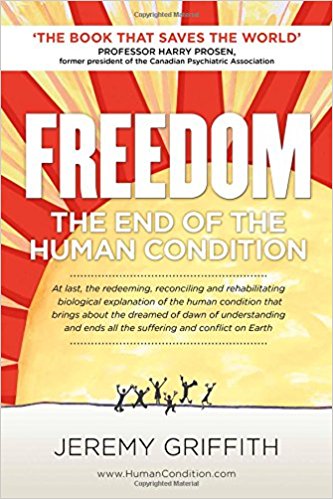
Freedom: The End of the Human Condition

Thank goodness I didn't have to
pay the $16 for this monster.

This book comes off like a pseudo-scientific version of a David Koresh sermon - one of those all-nighters where the cult leader harangues his followers spending hours telling him he's going to tell them some great and magnificent "truth" and that all these other so-called experts are against him because they can't handle the truth, but if they'll just listen to him, the truth will be explained. Then he never quite gets to the truth and tells you that you'll have to come back tomorrow night and he'll explain the rest of it. Griffiths spends the first two chapters of his book telling you what he's going to tell you and why you won't like it and probably won't understand it unless you read the book two or three more times, but he promises that that in chapter 4 paragraph 7 or something, the truth of the human condition will be explained and will set you free from guilt. 

Of course if you go to chapter 4, paragraph 7 you'll be treated to another repetitive, name-dropping, collection of confident assertions that the "human condition" is clearly explained or will be in Chapter 8 or that it was in Chapter 3 and you were just too stupid to get it. And then Griffith sets sail on another of those boundless oceanic sentences from which my college grammar instructor would be hard pressed to extract a subject and predicate from somewhere within the tangle of hyphens, semi-colons and parentheticals. (Griffith just loves his hyphenated words).

I got the impression that he was leading up to the idea that our natural state was running around naked and not having much sex and living as a cooperative member of the collective. He mangles up a mish-mash of academic sounding references to Plato, Darwin, Moses and a panoply of religious and scientific characters, flinging them at you so quickly and in such a disorganized way, it's like stepping into the mind of someone with severe bipolar experiencing an almost psychotic manic episode. Having two bipolar family members, I recognize the pressured speech and the skirting along the edges of word salad that characterizes the prose in this book, pretending to be academic brilliance. 


This gets my lowest rating for
poor writing, muddled logic
and creepifying content.
Hey, Mom, look at all the citations! This must be brilliant because I can hardly read it. Of course, Griffith dodges that problem by starting out claiming that people are so resistant to knowing the truth about the mystical "human condition" which is the root of all our problems, that we may find that we cannot understand what we are reading. (see David Koresh, Reverend Moon, the Mahareshi Mahesh Yogi, Charles Manson, Ervil LeBaron, Bhagwan Shree Rajneesh, Jim Jones and Marshall Applewhite)

I'm not saying Griffith is going to go off and commit human sacrifices, but the style of the book has and website, his array of followers who shout his praises and who actually vow that Griffith's brilliant work is going to "save the world", give me pause. Of course, as a Christian I follow someone who claimed he would save the world (at least the bit that wanted to be saved). I suppose a fairer comparison between Griffith and a similar leader would be to compare him to L. Ron Hubbard. He started out with claims that he could save the world and a scientific sounding book. I tried once to read "Dianetics", Hubbard's book and Scientology's "bible". Hubbard's reminds me a lot of Griffith's work.

Will understanding the "human condition" save the world from war and stuff? I don't think so. Okay, confuse the world maybe, but save it? I'm not sure letting our reasoning mind assent to our stumbling around naked, merging with the collective and following our instincts is going to solve any world problems. Of course, I suppose if the enlightened folk who belong to Griffith's gang of acolytes are put in charge, we won't have to actually think about such things anymore.

This book has a creepy sort of vibe to it. Griffith would say it's because I am in denial and cannot deal with the truth. Jack Nicholson should play Griffith in the movie. Sorry guys, I don't think this awkward and oppressive book solves anything. I just don't.

© 2017 by Tom King

Saturday, September 9, 2017

Hacksaw Ridge


Hacksaw Ridge is the incredible true story of Corporal Desmond T. Doss, a mild-mannered Seventh-day Adventist medic who joined up in World War II as a conscientious objector. Doss rejected the label, calling himself a conscientious cooperator.  His stubborn faith is something we don't see much in this world anymore. His exploits as a medic changed the way the Army utilized medics in the Pacific. Doss actually badgered his commander into letting him go out with his unit. Ordinarily stretcher bearers brought the wounded back to the aid station where the medics would treat them. A lot of guys didn't make it back. By going with his unit, Doss was able to save a lot of lives. At first the men in his unit hated Doss and mistreated him trying to force him out. He stood firm and eventually not only won the respect of his fellow soldiers, but they came to consider him their lucky charm, at one point balking at moving forward without Desmond with them.

Three pineapples for this one.
I watched several ignorant critics review the movie who marked it down because Doss's exploits in the movie were unrealistic. The truth is that director Mel Gibson actually toned down Doss's history for the movie because he didn't think people would believe what actually happened. A lot of people didn't believe it anyway. Unlike the movie, Doss continued with his unit after the action on Hacksaw ridge and was wounded by the grenade a couple of days later. After he was wounded, the stretcher bearers taking him to the aid station came under fire. Doss saw other wounded men, rolled off the stretcher and went to treat them. He ordered the stretcher bearers to carry the other wounded to the aid station first. While treating the wounded, Doss was himself wounded in the arm by a sniper, bound it up with a rifle butt and crawled 300 yards to the aid station on his own.

It's a story of faith and courage and patriotism, something a lot of this generation's precious snowflake movie critics just don't get. One of the best war films, if not the best war film I've ever seen. I just wish Gibson had shown the rest of the true story - the bit no one would believe. Unlike the movie depicts, Doss fought on Guam and Leyte before he went to Okinawa, earning two Bronze Stars before he won the Medal of Honor at Hacksaw Ridge. A former Japanese sniper who fought on Hacksaw years later told Doss he'd had the young medic in his sights multiple times that day, but every time he tried to pull the trigger his gun jammed. You kinda have to believe in the supernatural to believe that one. I do. He lost his Bible crawling back to the aid station. Months later, in the hospital, Doss received a package in the mail. It was his Bible. His whole unit had scoured the battlefield, with snipers still taking potshots at them, found his Bible and sent it to him.

His unit was remarkable in and of itself. The 77th division fought alongside a Marine Battalion who were so impressed by the courage of the Army guys, they nicknamed Doss's Division the 77th Marine Battalion, a mark of real respect by the Marines.

Doss was protected by angels. Even toned down, the movie leaves little room for doubt that Doss was protected. I do believe the devil wanted him badly. He didn't get Doss though. He came home and lived to a good old age, though disabled by his wounds.

This movie gets 3 pineapples for staying as close to the truth as any recent movie based on a true story.  Good for you Mel.

© 2017 by Tom King